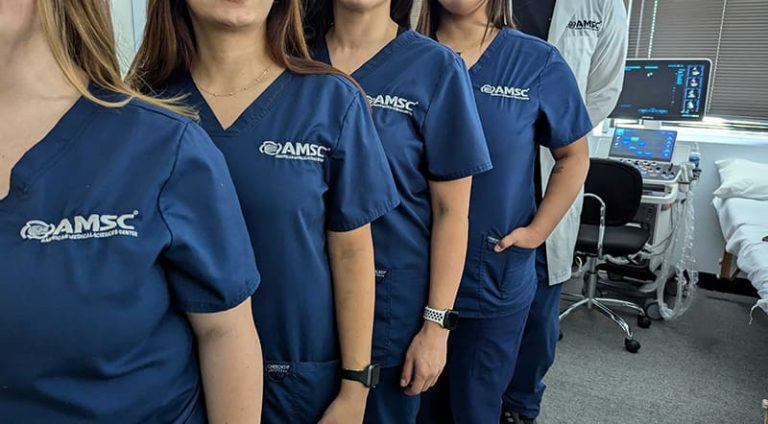
We’re proud to share that AMSC was recently featured in Crescenta Valley Weekly for our participation in the “Celebrating Healthy Hearts” event at Dignity Health Glendale Memorial Hospital.

The event brought together healthcare professionals, students, and community members to promote heart health awareness and preventative care. As an ultrasound college serving Los Angeles County for over 30 years, AMSC is committed not only to educating the next generation of diagnostic medical sonographers, but also to actively supporting community health initiatives.

Our students and faculty had the opportunity to engage with attendees, highlight the importance of diagnostic imaging in cardiovascular health, and represent the vital role sonography plays in early detection and patient care.

Community involvement has always been part of our mission. Healthcare starts with education, and education is strongest when it’s connected to the community it serves.

We’re grateful to Crescenta Valley Weekly for the coverage and to Dignity Health Glendale Memorial Hospital for hosting such a meaningful event.

You can read the full article here:

https://www.crescentavalleyweekly.com/featured/02/26/2026/celebrating-healthy-hearts-at-dignity-health-glendale-memorial-hospital/

Thinking about studying sonography? Here’s a simple guide to two exciting paths you can take! 

If you’re considering a career in diagnostic medical sonography, you might have come across terms like Vascular Ultrasound and Echocardiography (Echo). These are two different areas you can specialize in, but what do they actually mean? And how do you know which one might be right for you? 

Let’s break it down in a way that’s easy to understand. 

What Is Echocardiography? 

Echocardiography, or Echo, is a type of ultrasound that looks at the heart. If you become an Echo tech, your job will be to take pictures of the heart using sound waves. These images help doctors see how well the heart is working. 

You’ll learn to check things like: 

Common Echo tests include: 

What Is Vascular Ultrasound? 

Vascular ultrasound focuses on the blood vessels like the arteries and veins that carry blood throughout your body. If you become a vascular tech, you’ll use ultrasound to check if blood is flowing properly. 

You’ll learn to look for: 

Common vascular tests include: 

 Which One Should You Choose? 

You don’t need to decide right away. During your training, you’ll get a chance to explore different types of ultrasound. The most important thing is to follow your interests and see what feels like the best fit for you. 

No matter which path you choose, you’ll be making a real difference in people’s lives by helping doctors diagnose and treat health problems. 


Start in California, Go Anywhere: How Your Sonography License Opens Doors Nationwide 

Thinking about a career in Diagnostic Medical Sonography but wondering where it can take you? Here’s the good news: a California education and certification in sonography can open doors across the entire United States. 

At American Medical Sciences Center (AMSC), we prepare our students not just for jobs, but for careers with national reach.  

Your California Training, Recognized Nationwide 

While California doesn’t require a state-specific license to practice sonography, our students graduate with the knowledge and preparation needed to earn national certifications like the RDMS (Registered Diagnostic Medical Sonographer) from ARDMS or ARRT. These credentials are widely accepted across the U.S., making it possible for you to work in any state.  

What About State Licensure? 

In all other states, national certification is sufficient to begin your career in hospitals, clinics, and imaging centers. 

That means if you’re trained and certified in California, you’re already on the path to working in: 


Why This Matters 

Choosing a program like AMSC’s Diagnostic Medical Sonographer program means you’re not just preparing for a job in California, but you’re building a portable, in-demand career that can move with you wherever life takes you. 

Ready to Go National?
Learn more and apply today at www.amsc.edu

Evening Diagnostic Medical Sonography Classes at AMSC Balancing work, family, and your future? You don’t have to choose just one. 

At American Medical Sciences Center (AMSC), we know that life doesn’t always follow a 9-to-5 schedule. That’s why we offer evening classes for our Diagnostic Medical Sonographer (DMS) program, so you can pursue a rewarding healthcare career without putting your life on hold. 

Why Evening Classes Work for You 

Whether you’re working full-time, raising a family, or simply more productive at night, our PM classes are designed with your lifestyle in mind. Here’s why they’re a smart move: 

What You’ll Learn 

Our evening Diagnose Medical Sonography program covers everything you need to become a confident, capable sonographer, including: 

This program is perfect for: 

 Your Future Starts Tonight 

Evening classes at AMSC are more than just convenient. They’re your opportunity to build a better future on your terms. With our supportive instructors, hands-on training, and evening schedule, you’ll be ready to step into a high-demand healthcare role with confidence. 

Ready to take the next step? Click here to learn more! 

At American Medical Sciences Center (AMSC), we believe that finances should never stand in the way of your education. That’s why our Financial Aid Department is here to guide you every step of the way, so you can focus on your future, not your finances. 

What Can Financial Aid Do for You? 

Whether you’re just starting your journey or returning to school to change careers, our financial aid team is ready to help you explore all your options.  

We help you apply for: 

Help with Forms and Deadlines 

Deadlines can be stressful. We’ll make sure you stay on track and submit everything on time. 

Ongoing Support 

Have questions after you start classes? We’re still here for you. Our team provides continued support throughout your time at AMSC. 

Why It Matters 

Education is an investment, and we’re here to make sure it’s one you can afford. With the right financial aid package, you can focus on your studies and your future career in healthcare, not on how to pay for it.  

Let’s Get Started 

Our Financial Aid Department is ready to help you take the first step.
Visit www.amsc.edu or contact our Financial Aid Office today to learn more! 

If you’re interested in becoming an ultrasound technician, you have probably heard of SPI, ARDMS, and ARRT exams. But do you know what they really mean and why do they matter to a sonographer career? Let’s break it down in simple terms so you can understand how each one fits into the path of a future sonographer. 

SPI – Sonography Principles and Instrumentation

The SPI exam is the first step toward becoming a certified sonographer. It’s a test that checks your knowledge of ultrasound physics and the principles behind using ultrasound equipment. 

The SPI is the foundation of your sonography career. Before starting to scan patients, you need to understand how the ultrasound machine works and the physics behind it. The exam ensures that you know how to get the best images and avoid errors. 

You’ll take the SPI exam once you’ve completed your studies in ultrasound principles. Passing it is crucial to moving forward in your career.

ARDMS – American Registry for Diagnostic Medical Sonography


ARDMS – American Registry for Diagnostic Medical Sonography

Once you’ve passed the SPI, you will want to take the ARDMS certification. ARDMS is a national organization that provides certification for sonographers. It covers a variety of specialties like abdominal, obstetric, and musculoskeletal sonography. 

Getting certified by ARDMS shows employers that you have the skills and knowledge needed to perform high-quality scans. It’s a mark of professionalism that gives you a competitive edge in the job market. 

To achieve ARDMS certification, you need to pass specific exams based on the areas of sonography you specialize in.

ARRT – American Registry of Radiologic Technologists


ARRT – American Registry of Radiologic Technologists

The ARRT certification is another important credential, but it’s more focused on radiologic technology. While ARDMS deals specifically with sonography, ARRT includes a broader range of medical imaging techniques. 

If you’re interested in a career that combines sonography with other imaging fields, like X-rays or CT scans, ARRT might be the certification for you. Some sonographers even pursue ARRT certifications in different imaging specialties to expand their job opportunities. 

While ARDMS is the main certification for sonographers, ARRT can be a great option if you want to branch out into other areas of medical imaging. 

Are you ready to Start Your Journey in Sonography? 

Now that you know the difference between SPI, ARDMS, and ARRT, you can see how each step plays an important role in the sonographer career.  

Click HERE to schedule a tour of our college! 

You’ll have the chance to explore our campus and meet with our admission coordinator.

Imagine walking into a hospital or clinic, feeling nervous about a health concern. A caring professional greets you, helps you feel comfortable, and uses advanced technology to take a closer look inside your body. That person is a sonographer who plays a big role in diagnosing and monitoring medical conditions. 

Bringing Images to Life 

Sonographers use ultrasound machines to create images of organs, tissues, and blood flow. These images help doctors diagnose conditions, track pregnancies, and guide treatments. 

With just a handheld device and sound waves, sonographers can “see” inside the human body without using radiation. 

But sonographers do more than just take pictures. Their responsibilities include: 

Making a Difference Every Day 

Whether it’s checking a baby’s heartbeat, spotting a hidden medical issue, or giving patients peace of mind, sonographers change lives. Their work requires skill, patience, and a deep understanding of the human body. 

If you love technology, problem-solving, and helping people, a career as a sonographer might be the perfect fit for you! 

Are you ready to Start Your Journey in Sonography? 

Now that you know the difference between SPI, ARDMS, and ARRT, you can see how each step plays an important role in the sonographer career.  

Click HERE to schedule a tour of our college! 

You’ll have the chance to explore our campus and meet with our admission coordinator. 


You walk into a medical imaging department. One patient is getting an ultrasound, another is preparing for an X-ray. The machines look different, the procedures feel different—but what exactly sets sonography and radiology apart? 

Both fields help doctors see inside the body, but they work in different ways. Let’s break it down! 

The Technology Behind the Images 

  1.  Sonography (Ultrasound) uses high-frequency sound waves to create images of organs, tissues, and blood flow. It’s radiation-free and safe for all ages, including pregnant women. 
  2.  Radiology includes imaging methods like X-rays, CT scans, and MRIs, which use radiation or magnetic fields to produce detailed pictures of bones, organs, and soft tissues. 

What They’re Used For: 

Sonography: Often used for pregnancy scans, heart and vascular exams, and checking soft tissues like the liver, kidneys, or thyroid. 

Radiology: Helps diagnose fractures, lung diseases, brain conditions, and even cancers. 

The Role of the Specialist 

Sonographers operate ultrasound machines, analyze images, and work closely with doctors to detect abnormalities. They often spend more time with patients, guiding them through the process. 

Radiologic Technologists perform X-rays, MRIs, or CT scans and ensure the right amount of radiation is used for clear images. Their work focuses more on capturing the right shot quickly and efficiently. 

Which Career is Right for You? 

If you love working closely with patients, enjoy problem-solving, and prefer a radiation-free imaging field, sonography might be for you! 

If you’re fascinated by advanced imaging technology and don’t mind working with radiation, radiology could be a great fit. 

Imagine waking up every day knowing your job makes a difference. You help doctors find answers, give patients peace of mind, and even witness the first heartbeat of a baby. That’s the life of a sonographer—a rewarding career in the medical field. But how much do sonographers make? And what are the job opportunities like? Let’s dive in! 

How Much Do Sonographers Make? 

Sonography is not just fulfilling—it pays well too. Salaries vary based on experience, location, and specialty, but here’s a general idea for the 2025 salary: 

Where Do Sonographers Work? 

Sonographers are in high demand across the country. You can find job opportunities in: 

Hospitals – Fast-paced and exciting, with a variety of patients every day. 

Outpatient Clinics – A steady schedule and a close-knit team. 

OB/GYN Offices – Helping moms-to-be see their baby for the first time. 

Cardiology & Vascular Labs – Assisting doctors in diagnosing heart and blood vessel conditions. 

Mobile Imaging – Traveling to different locations and helping patients in need. 

A Growing Career with Job Security 

The demand for sonographers is growing fast. With advancements in medical imaging and an aging population, more specialists are needed every year. The Bureau of Labor Statistics predicts a 10% job growth over the next decade—much faster than most careers. 

Is Sonography the Right Career for You? 

If you love technology, patient care, and problem-solving, sonography could be the perfect career. Plus, it doesn’t take years of medical school to get started! Many programs can be completed in 2 years or less. 

So, if you’re looking for a stable, high-paying, and meaningful job, sonography might just be the perfect fit.  

Are you ready to Start Your Journey in Sonography? 

Now that you know the difference between SPI, ARDMS, and ARRT, you can see how each step plays an important role in the sonographer career.  

Click HERE to schedule a tour of our college! 

You’ll have the chance to explore our campus and meet with our admission coordinator. 

Have you ever wondered how doctors see inside the human body without surgery? One of the most important tools they use is ultrasound—and the skilled professionals behind the machines are called ultrasound technologist or sonographers. 

If you’re looking to start a rewarding career in healthcare, becoming an ultrasound technician in California is an exciting path. Here’s a simple guide to get you started! 

Step 1: Get the Right Education 

Your journey begins with a formal education. In California, most ultrasound technicians complete a Bachelor’s or Associate’s Degree in Diagnostic Medical Sonography. This program usually takes two years and a half and covers: 

You will also get hands-on training in a clinical setting, where you’ll practice scanning real patients. 

Step 2: Gain Clinical Experience 

While studying, you’ll need to gain clinical experience. This means working in a healthcare setting under the supervision of a certified professional. You’ll have the chance to apply what you’ve learned, develop your skills, and build your confidence. 

The clinical experience usually lasts for several months and is part of your educational program. 

Step 3: Get Certified 

After completing your education and clinical training, it’s time to become certified. Certification shows employers that you have the skills and knowledge to perform ultrasound exams. In California, many employers prefer certification from the American Registry for Diagnostic Medical Sonography (ARDMS). 

To earn ARDMS certification, you must pass the SPI exam (Sonography Principles and Instrumentation) and one or more specialty exams, like: 

Some sonographers choose to get certified in multiple areas, which can open more job opportunities! 

Step 4: Look for Jobs 

California has a high demand for ultrasound technicians, so you’ll have plenty of job options. You can find work in: 

The job market is competitive, but having experience, and the SPI and ARDMS or ARRT certifications, and the right attitude will help you stand out. 

Becoming an ultrasound technician in California is a step-by-step process that can lead to a fulfilling and high-paying career. If you love working with technology and helping people, this could be the perfect path for you.  

Ready to Learn More? 

If you’re excited about a career in sonography, the next step is easy! Click HERE to reach out to our Admissions Department today to schedule a tour of our college. You’ll get to see our campus, meet instructors, and learn about how our program can help you take the first step toward becoming a sonographer.